

Beyond Borders
Remembering that independence and connection are not mutually exclusive.

As we celebrate Canada Day and Independence Day in the United States this week, we’re reminded of the stories our countries tell us about ourselves and who we are, or are supposed to be. Those stories form a kind of national ethos. At the same time, local identity is strong, and can run counter or parallel to a national narrative; a finer grain at street level reveals nuance and can illuminate different perspectives.
We’ve previously touched on how the shared history of Detroit and Windsor is reflected, especially in the last year. Here on the Detroit River we celebrate a shared spectacle. The fireworks—held only somewhat confusingly a couple of weeks before either the U.S. or Canada’s national holiday—remain one of the region’s most visible expressions of our cross-border connection.


The Greater Detroit-Windsor Project got a head start on reflecting that reality of connection a little earlier this year by hosting our first Stakeholder Convening on May 20 on the 32nd floor of the Guardian Building. In fact, we’re still processing the experience because the energy, candor, and feedback were overwhelmingly positive. Yes, despite the current national sentiment, we are very much connected.
Thanks to a grant from the Community Foundation for Southeast Michigan, the Greater Detroit-Windsor Project spent the last year creating a game plan for bringing together stakeholders with the eventual goal of working on discrete shared issues. The approach was guided by a Steering Team and facilitator who had participants use “appreciative inquiry” — focusing discussion from “what’s broken,” to “what’s working.”
More than 60 people came prepared to spend a half-day meeting each other, thinking, writing, and working together—with pens, markers, and actual paper. AI be damned! Participants thoughtfully engaged in a series of exercises exploring how we connect across borders: between Detroit and Windsor, Wayne and Essex counties, and across the broader metropolitan region.
The room brought together practitioners from Detroit, Windsor, surrounding suburbs, and beyond, representing a wide range of industry sectors and perspectives. Together, we began asking a simple but profound question: What would it mean to truly see ourselves as one interconnected region?
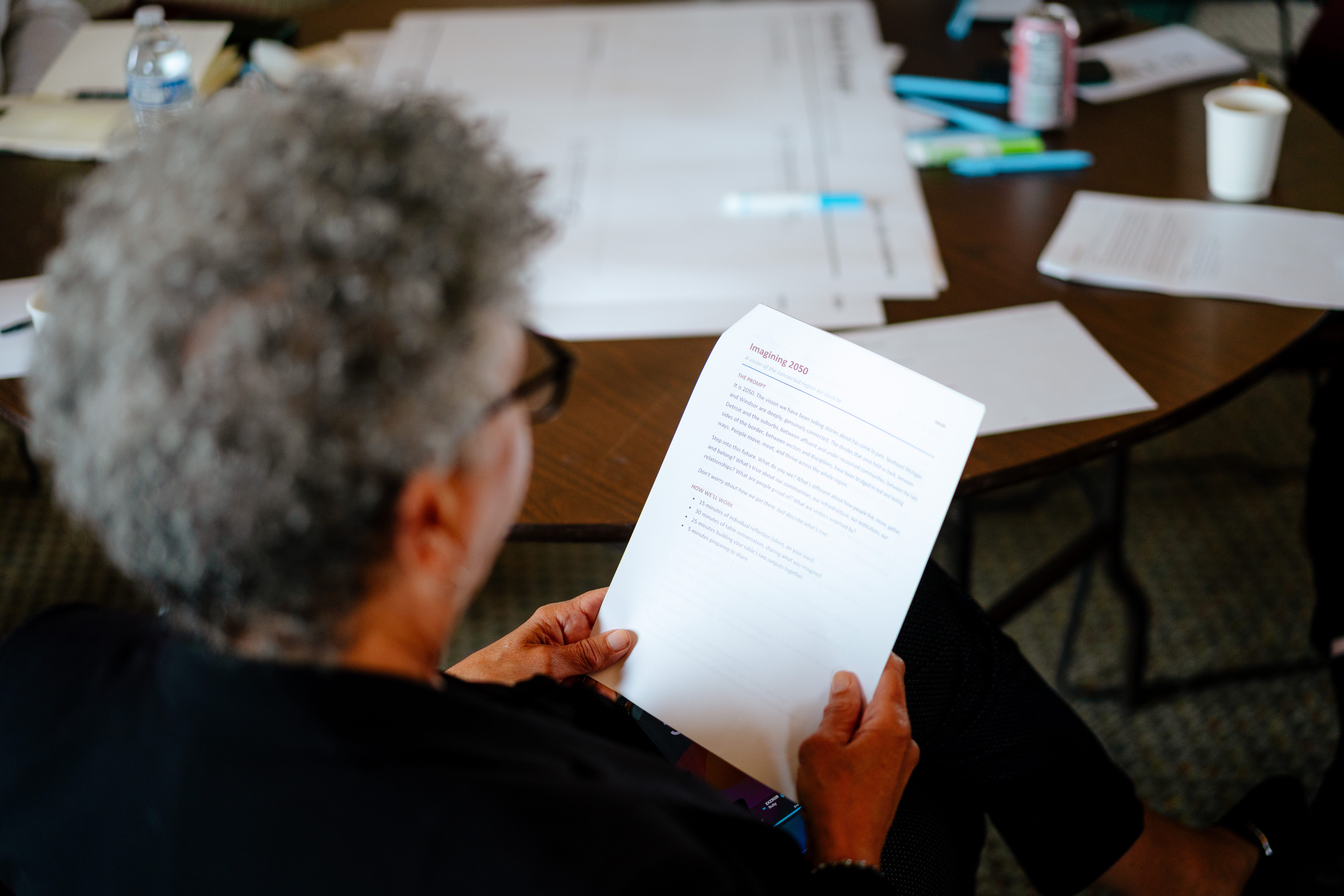
We also challenged ourselves to think beyond today’s politics and institutions. What might the Greater Detroit-Windsor region look like 50 years from now if we intentionally strengthened our connections across all borders? That long horizon is central to the Greater Detroit-Windsor Project. We believe meaningful regional change is a generational question, and it is especially meaningful right now with our closest municipal neighbors: Detroit and Windsor. Thank you to all who attended!
And there’s more to come. We will be hosting a second convening/conference later in the fall, and are also planning an informal, in-person get together or two in the meantime. We’ll keep you posted!
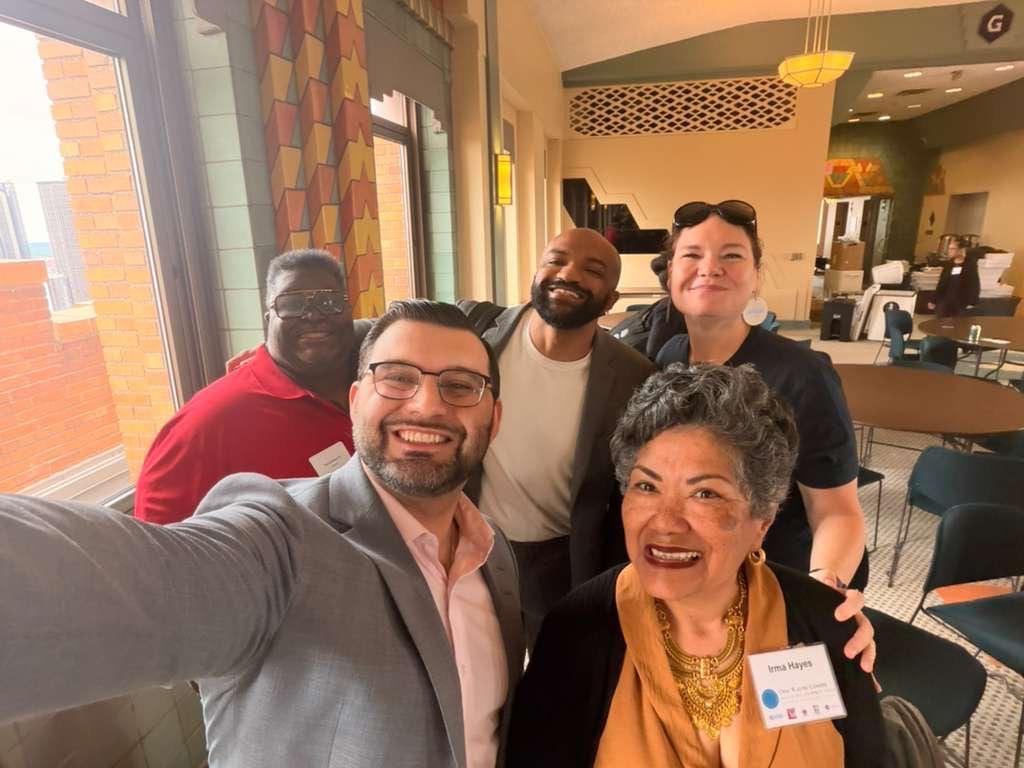
Our Stakeholder Convening was generously hosted by the Wayne County Office of Sustainability and immediately followed the Wayne County Housing Summit: Mapping Our Shared Future, which brought together more than 200 participants from government, development, banking, planning, philanthropy, and other housing-related organizations, representing the 43 municipalities of Wayne County.
The highlight of the Summit was the unveiling of the Michigan Zoning Map, presented by Leah DuMouchel, Director of Programs and Communications at the Michigan Association of Planning. Her presentation, Understanding Our Shared Future Through Zoning (slides 15-57), demonstrated how examining zoning across municipal boundaries can reveal whether current land-use policies are aligned with the way people live today—as well as the kinds of communities we hope to build in the future.
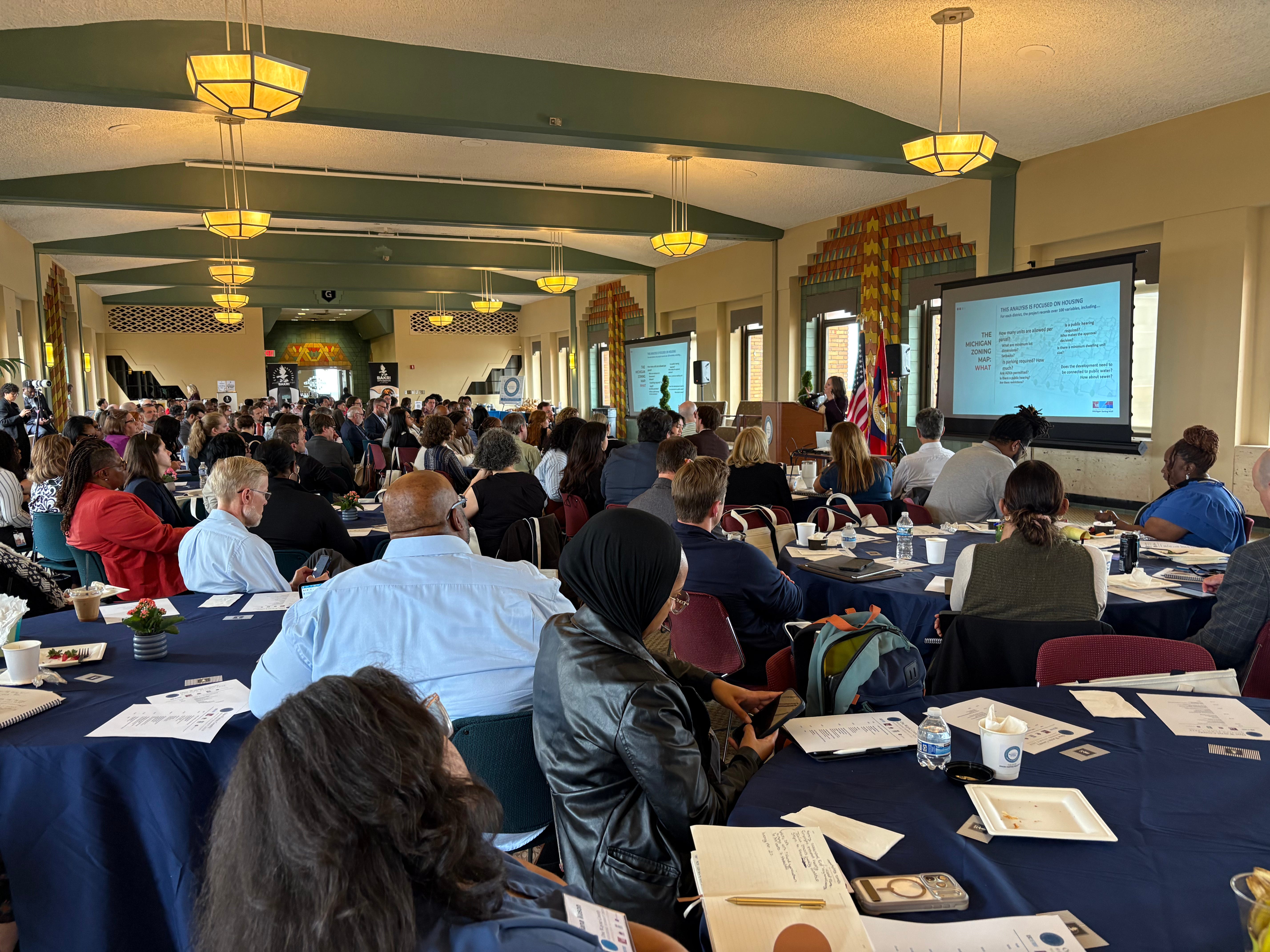
The Michigan Zoning Map is inspired by a broader national effort to better understand how local zoning policies—particularly the widespread prevalence of single-family zoning—shape housing affordability, neighborhood vitality, and quality of life. First piloted in the Grand Rapids region, Michigan’s Zoning Map has expanded, with the Wayne County map unveiled at the May 20 Summit.
The data raises important questions about whether current zoning practices are creating enough housing choice to meet current and future needs. For example, while 92% of residential parcels in Wayne County allow single-family homes by right, less than a quarter of lots allow building types with more density, even though 36% of households consist of just one person.


These findings suggest that many communities may be limiting opportunities for the kinds of housing that support vibrant downtowns, mixed-use commercial corridors, and neighborhoods that are more walkable, compact, and economically resilient.
For the Greater Detroit-Windsor Project, the presentation underscored the importance of looking beyond municipal boundaries when considering housing policy in a broader context. It also raises an intriguing cross-border question: Are similar zoning patterns present in Windsor-Essex? If so, what can our regions learn from one another? By comparing approaches to land use and housing policy, Detroit and Windsor have an opportunity to identify best practices that could contribute to a stronger, more stable, and more connected regional housing market.
Vote Local
Whether or not you’re feeling particularly patriotic at the moment, remember to vote local in just over a month, on August 4. The Wayne County Millage, which would fund SMART and DDOT bus expansions, new routes, and on-demand microtransit across the county, is top of mind in terms of connectivity across Michigan’s largest county. Transportation Riders United has been one of the leading efforts to engage voters and provide information related to the important measure.
And later, in the fall, Windsor-Essex will host its own local elections on Monday, October 26, 2026. The Greater Detroit-Windsor project has tabulated over 90 candidates and will be launching a local candidates survey in the second half of July, similar to the Metro-Detroit effort last year and will share results in the lead-up to the October election.